Summary
LLM and OCR evidence methodology explains how model output becomes usable operational evidence without becoming authority. The method is prompt-versioned, validated, cited, repairable, and reviewable.
Reader Question
How do prompts, OCR, document evidence, validation, confidence, repair, and human correction make model output useful without treating it as truth?
Methodology
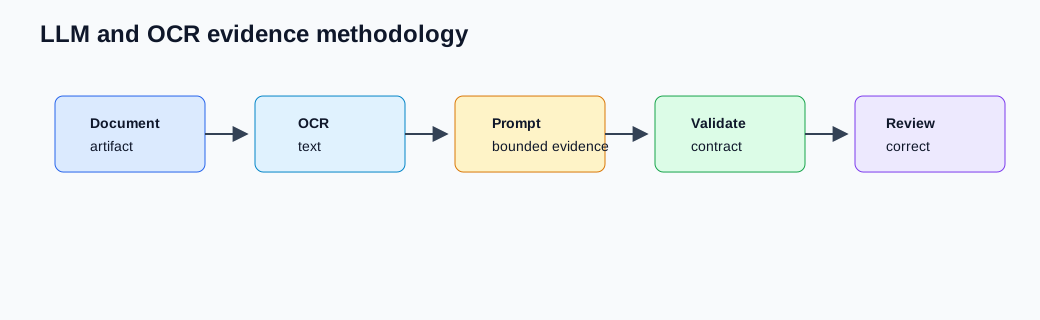
OCR and preprocessing turn documents into text and page artifacts. Prompted services send bounded evidence to LLM adapters with versioned prompts and structured output expectations. Validation checks shape, semantics, and business constraints. Evidence refs and citations preserve why an output was accepted.
If output is malformed or ambiguous, repair paths either retry within contract, open review issues, or ask humans to correct the evidence. Downstream workflows consume validated evidence and confidence, not raw model responses.
Boundaries
Provider adapters live under LLM and OCR services. Domain workflows own prompt purpose, evidence budgets, validation, and review semantics. Tests protect prompt contracts and validation behavior.
Tradeoffs
The method is slower than sending a whole document to a model and trusting the answer. The benefit is auditability, correction, and a clear distinction between generated evidence and operational decisions.