Summary
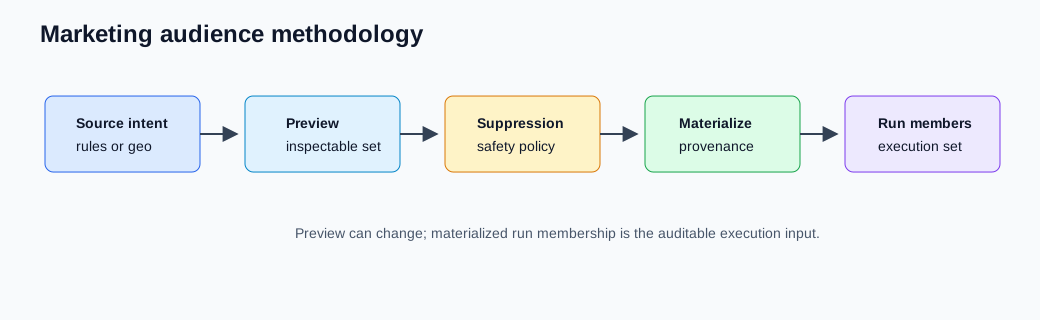
Marketing audience methodology explains how a possible population becomes a safe campaign audience. The platform separates exploration, import, preview, suppression, materialization, and run membership so a campaign can explain why each member was eligible.
Reader Question
How do source populations, geo selections, audience rules, suppression policy, and materialization combine into campaign eligibility?
Methodology
Audience Studio starts with intent: an operator defines a population using approved source profiles and constraints. Preview services evaluate that intent without creating a run-owned member set. Geo imports are handled as a source boundary: geo produces saved selections and candidate context; marketing imports them through contracts rather than owning geo internals.
Suppression policy then narrows possible outreach to permissible outreach. Runtime materialization snapshots the audience that a run will actually use, records provenance, and lets later run membership explain what rule, source, or selection admitted the member.
Boundaries
Authoring code owns audience definitions and previews. Runtime code owns materialization and member candidates. Suppression services own eligibility safety. Geo remains a peer module and crosses into marketing only through selection and import contracts.
Tradeoffs
The method introduces multiple audience states instead of one SQL query. That extra structure lets the platform support preview, audit, suppression changes, and run-specific membership without losing why a contact was included.