Summary
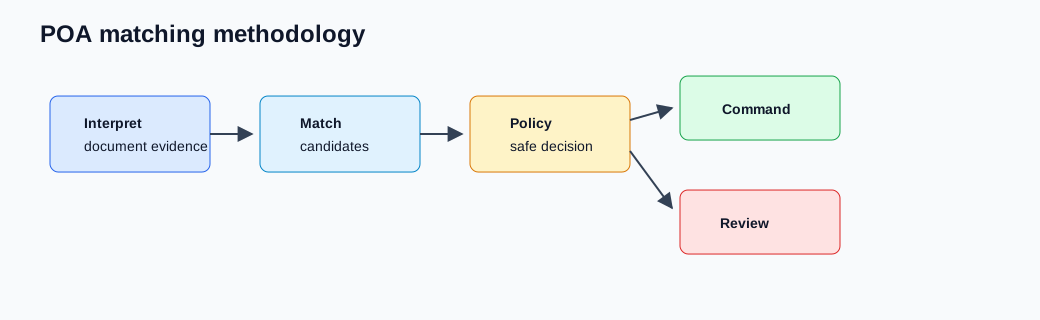
POA matching methodology explains how interpreted purchasing evidence becomes a workflow decision. The method combines document interpretation, candidate matching, policy validation, review routing, and command eligibility.
Reader Question
How does interpreted invoice, packing-slip, vendor, and job evidence become a match decision, review item, external command, or repair path?
Methodology
Interpretation extracts structured evidence from source documents. Matching services compare that evidence with operational records and score candidates. Policy modules decide whether a candidate is acceptable, requires review, or must be routed to a specific repair workflow.
Workflow services then move the case through validation, issue projection, operator repair, finalization, and command creation. External commands consume validated workflow state rather than redoing interpretation or matching.
Boundaries
Interpretation answers "what did the document say?" Matching answers "which operational record does it fit?" Policy answers "is this safe?" Workflow state answers "what should happen next?" Commands answer "what external write should be executed?"
Tradeoffs
The method creates more states than a direct auto-match, but it prevents ambiguous evidence from becoming external writes without review.
Related Threads
- POA Matching And Validation Workflow
- POA Operator Repair
- POA Command Failure Repair