Summary
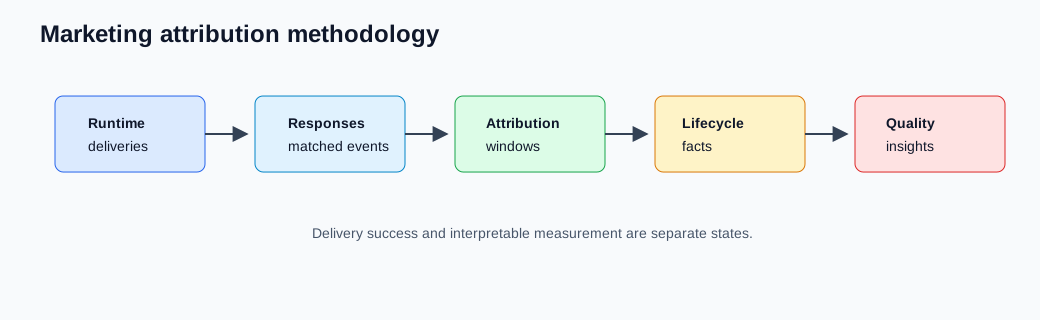
Marketing attribution methodology turns runtime events into interpretable campaign results. It keeps delivery success, response matching, lifecycle publication, quality validation, and serving snapshots separate so insight pages can say what is known and what is unsafe to interpret.
Reader Question
How do responses, lifecycle events, attribution windows, and quality checks produce campaign results that engineers and operators can trust?
Methodology
Runtime and external source events are published first. Attribution logic links responses back to eligible members, tracking tokens, source events, and campaign context. Lifecycle publication turns event streams into facts that can be measured consistently over time.
Measure publication and serving snapshots then create the queryable insight surface. Quality validation checks freshness and coherence before the console treats a result as meaningful. A campaign can have delivery records while its analytics remain warning or error state.
Boundaries
Analytics code owns attribution and publication. Runtime code owns deliveries, actions, tokens, and member steps. The insights console reads serving snapshots and quality signals rather than reconstructing event history inline.
Tradeoffs
Attribution requires delayed interpretation because responses arrive after delivery. The benefit is that campaign performance is expressed as evidence with quality state, not as a best-effort count glued to a send job.
Related Threads
- Marketing Insights And Quality
- Marketing Lifecycle Quality Failures
- Marketing Run Execution