Marketing System State Machine
Summary
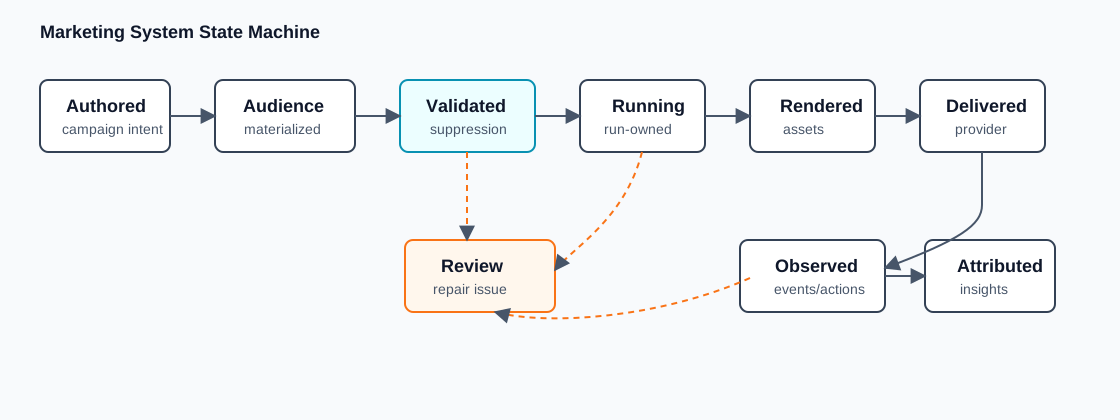
Marketing moves from editable intent to run-owned operational state. The state machine protects that boundary: authoring can change, but a run needs concrete members, rendered assets, deliveries, events, actions, and reviewable failures.
Reader Question
Which states does marketing pass through as an operator moves from campaign intent to measurable outreach, and where can automation pause for review or repair?
State Machine
The first state is Authored: campaigns, templates, flows, triggers, and actions describe what could happen. Audience building moves intent into Audience Previewed, then Audience Materialized when a run snapshots the eligible member set. Suppression and validation determine whether each member can proceed.
Runtime then owns execution. Running creates member steps and render work. Rendered assets can proceed to delivery or review. Delivered records provider or export outcomes. Observed captures events, responses, and action results. Attributed turns runtime evidence into business interpretation.
The repair loop is always available. Failed validation, missing render inputs, provider errors, suspicious attribution, or lifecycle-quality gaps should become reviewable issues. A repair returns the run to the earliest safe resumable state rather than rewriting authoring truth.
Visual
The diagram emphasizes the authored-to-runtime boundary, suppression gate, delivery/event feedback loop, and repair path.